NY HSI STEM Hub Newsletter
Welcome to the NY HSI STEM Hub Community!
Welcome to the inaugural issue of the New York HSI (Hispanic-Serving Institution) STEM Hub Newsletter! The NY HSI STEM Hub is a network of HSI-designated and eHSI-designated community colleges in the south east region of New York State, funded by the National Science Foundation (Award #2311235) and led by SUNY Westchester Community College in partnership with the Center for Broadening Participation in STEM at Arizona State University.
Who We Are
SUNY Community Colleges
- Westchester
- Rockland
- Dutchess
- Nassau
- Orange
- Suffolk
- Sullivan
CUNY Community Colleges
- Borough of Manhattan
- Bronx
- Guttman (Manhattan)
- Hostos (Bronx)
- Kingsborough (Brooklyn)
- LaGuardia (Queens)
- Queensborough (Queens)
The NY HSI STEM Hub supports SUNY and CUNY community colleges in strengthening STEM education and student success through:
- Professional development in student-centered instruction for STEM faculty.
- Training, mentoring, and technical assistance for NSF grant development, implementation, and management.
- A collaborative alliance of two-year colleges sharing effective practices, lessons learned, and scalable strategies to advance systemic change in undergraduate STEM education.
Through these efforts, the Hub equips faculty and staff with tools for student-centered engagement and the grantsmanship skills needed to spark and sustain long-term institutional improvement.
Community colleges are a critical gateway to STEM degrees and careers—fields that consistently offer some of the strongest labor market outcomes. STEM employment has grown faster than non-STEM employment since 2010, a trend expected to continue. According to the Bureau of Labor Statistics (2022–2032 projections), STEM occupations are projected to grow 7%, compared to 2% for non-STEM fields. Middle-skill STEM roles will employ the largest number of workers, while the fastest growth will occur in science and engineering occupations (12%), followed by S&E-related fields (9%).
M. P. Fay, “Community College STEM Pathways,” NY Teachers College, Columbia University, New York, Policy Fact Sheet, Jul. 2022. [Online]. Available: https://ccrc.tc.columbia.edu/media/k2/attachments/community-college-stem-pathways.pdf
National Science Board, “Science & Engineering Indicators”, NSB-2024-5 p. “Sidebar: Projected Growth of Employment in STEM Occupations,” [Online]. Available: nsb20245-projected-growth-of-employment-in-stem-occupations (5).pdf
Funding for this project was awarded by National Science Foundation #2311235 to the SUNY Westchester Community College, in partnership with the Center for Broadening Participation in STEM at Arizona State University.
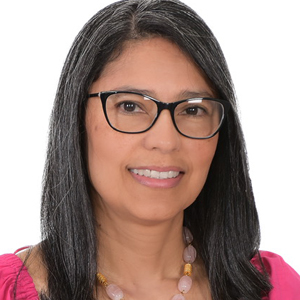
It was a pleasure to speak recently with Dr. Maria Mercedes Franco of Queensborough Community College about the many STEM grants and initiatives that she has led through the years, she is a truly passionate and caring STEM educator!
Dr. Franco is a Professor in the Mathematics and Computer Science Department at Queensborough Community College –The City University of New York. She has a Ph.D. in Applied Mathematics from Cornell University. She also holds a M.S. in Applied Mathematics from Cornell University and a B.S. in Mathematics from Universidad del Valle (Cali, Colombia). She is the author of a book chapter entitled “Examining Human Rights through the Lens of Statistics”, included in Mathematics for Social Justice: Perspectives and Resources for the College Classroom – Vol II: Focusing on Quantitative Reasoning and Statistics, Vol 66, American Mathematical Society. (2021)
She has led grant programs as a PI, Co-PI, and as lead faculty. In this edition’s Spotlight, we will focus on an NSF-funded program called the Center for Undergraduate Research in Mathematics (CURM), of which Dr.Franco is one of the Co-PIs/Co-Directors. The center is offering a funding opportunity that maybe be of interest to faculty in the mathematical sciences (i.e. math, computer science, data science, statistics, economics, math education) at your institutions or networks.
Funding Opportunity: CURM Mini-Grants for faculty in the mathematical sciences
Applications for the 2026–2027 cycle of CURM mini-grants are now open. These NSF-funded grants support faculty pairs—one from a two-year college and one from a four-year institution—who are interested in collaborating to develop and implement undergraduate research experiences in mathematics at their home institutions. These grants provide both funding and professional development to help faculty design sustainable and meaningful research opportunities for students.
For more information, go to the CURM Website, or go directly to the CURM mini-grants page. If a faculty member is interested and needs a partner, here is a list of people also looking for partners.
Application deadline: December 15, 2025
Online ApplicationIf you are just learning about this and need more time to review this program, please consider applying next year!
CURM was founded by Michael Dorff in 2007 and has since engaged more than 300 faculty participants and impacted over 100) students across the United States. CURM-funded students have presented their research at mathematics conferences, co-authored publications with their mentors, earned student awards, and many have gone on to pursue graduate studies in mathematics. In recognition of these achievements, CURM received the 2015 Mathematics Programs that Make a Difference Award from the American Mathematical Society. CURM leaders and participants frequently share the program’s impact at regional and national meetings of the Mathematical Association of America, the American Mathematical Society, and the American Mathematical Association of Two-Year Colleges.This site includes links to several CURM-related articles about doing undergraduate research.
We look forward to the members of the NY HSI STEM Hub participating in CURM’s current and future program cycles. Thank you, again, to Dr. Franco for bringing this awesome opportunity to the Hub’s attention!
As an educator, I believe in continually adopting evidence-based best practices demonstrated to be effective at other institutions. For example, when teaching adult learners, I have found that breaking instruction into structured segments—such as a brief recap, lesson, short quiz, and lab—helps maintain engagement and supports deeper learning.
One practice I am especially known for is an activity I include in every class session, which I call “Name and Feeling.” In this exercise, each student stands and shares their name and how they are feeling that day. I first used this strategy as a high school teacher and have carried it into higher education because of its continued success. The purpose is to foster a safe, supportive classroom environment in which students feel seen and valued.
This activity also helps me understand students’ emotional and physical needs. If a student is hungry, tired, or overwhelmed, I can offer support—whether that means providing a snack, encouraging rest, or simply offering reassurance. Although students often find the exercise awkward at first, many grow to appreciate it by the end of the semester. Former students frequently tell me that they remember “Name and Feeling” and ask whether I still begin my classes with it, which reinforces its positive impact.
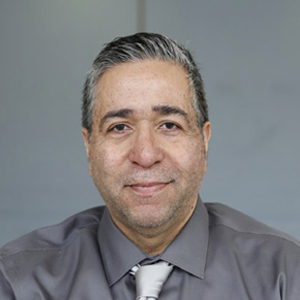
About Dr. Juan Rodriguez
Dr. Juan Rodriguez is an Assistant Professor of Cybersecurity at SUNY Westchester Community College with over seven years of teaching experience, a Ph.D. in Educational Technology Leadership, and multiple industry certifications. His work centers on creating innovative, industry-aligned labs and lessons, advising the Cybersecurity Club, and contributing to research and grant-funded initiatives such as the NSF New York HSI STEM Hub (DUE – Division of Undergraduate Education Grant), for which he serves as Co-Principal Investigator. With over a decade of prior IT experience and recognition such as the HiTec Innovative Program Award, he is committed to inspiring the next generation of cybersecurity professionals and advancing STEM education.
The New York HSI STEM Hub is a collaboration between SUNY Westchester Community College and Arizona State University’s Center for Broadening Participation in STEM (CBP-STEM). Its primary goal is to establish a professional development resource that supports faculty through student-centered instruction and grantsmanship.
Through a year-long professional development series, Hub members engage in topics such as STEM Belonging Theory, Project-based Learning, Inquiry-based Learning, and Grant Writing. Within this series, participants move through key stages of the grantsmanship pathway: developing a research idea grounded in their own institutional context, collaborating with faculty and grant professionals on their campus, and learning strategies for National Science Foundation (NSF) proposal development. The Hub uses solicitations from the NSF, such as the Improving Undergraduate STEM Education program (IUSE:EDU; NSF 23-510), to model each step of the grant writing process.
Tips for writing effective NSF grant proposals include:
- Reading both the solicitation of interest and the Proposal & Award Policies & Procedures Guide (PAPPG).
- Reviewing examples of funded proposals.
- Planning 3–6 months for proposal development.
- Identifying campus or external collaborators early and clarifying roles.
- Joining a mentorship program (e.g., New York HSI STEM Hub or Mentor-Connect).
If you are interested in learning more about student-centered instructional practices or grant writing and are part of the 14-campus SUNY and CUNY Hub, we encourage you to join the second cohort of the New York HSI STEM Hub.
If you have questions about applying for Cohort Two (application deadline is May 1, 2026). Please contact Mayrismir Cordero at mcorde19@asu.edu or Mary Hegarty at Mary.Hegarty@sunywcc.edu
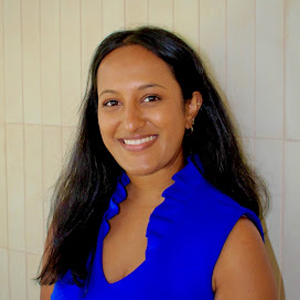
About Nithya Raman
Nithya Raman is a Program Manager of Research at the Center for Broadening Participation in STEM at Arizona State University, where she supports initiatives aimed at enhancing opportunities in STEM disciplines for undergraduate students across the country. She has received her master’s degree in economics from New York University, building on her academic foundation with a B.S. in Political Science and a B.S. in Economics from Barrett, the Honors College. Nithya’s passion for data-driven solutions and commitment to social impact drives her work and academic pursuits.
UNIDOS, Center for HSI Community Coordination:
If you work at a two-year college, we welcome you to join us for one of our UNIDOS HSI Community Listening Sessions focused on undergraduate STEM education at Community Colleges. Your perspective is invaluable, and we want to hear from YOU! This is an opportunity to share your insights, priorities, and challenges to help guide the work of the UNIDOS Center. Together, we can amplify the exceptional work happening at Community Colleges.
Date: January 30, 2026, 2:30-3:30 pm ET / 11:30 CT / 12:30 MT / 11:30 PT
RSVP Here: Community Colleges Listening Session
Contact: unidos@fiu.edu
UNIDOS Partnership Matching Travel Grants program is now accepting applications! It can be challenging to develop new collaborations – especially when you only have short interactions with people or only virtual interactions. With this in mind, the UNIDOS Partnership Travel Grant program will support small groups of faculty, staff, and administrators in traveling to partner institutions (or other relevant sites) specifically to initiate new collaborations or strengthen nascent collaborations focused on projects aligned with the NSF HSI program. By reducing financial barriers to in-person meetings, we aim to foster cross-institutional connections, encourage shared research and teaching initiatives, and expand opportunities for partnerships. This strategy will help catalyze new collaborations that advance STEM education research, grant development, STEM education teaching practices, and other initiatives focused on undergraduate STEM education at HSIs.
Upcoming Deadlines to apply: December 1, 2025; March 1, 2026; June 1, 2026.
Questions: unidos@fiu.edu
Hostos Community College: Science Week
Each fall semester, CUNY Hostos Community College hosts a “Science Week” for its students. This year’s event took place in November, and we’re delighted to share the links below so we can celebrate their good news and highlight ideas across the Hub. Congratulations to Hostos on a fantastic Science Week!
Hostos Community College 2025_NSD_ScienceWeek-OpenHouse-Web1
Contact Us
Contact us with any questions and future newsletter articles.
Mary Hegarty: mary.hegarty@sunywcc.edu or NYHSIHub@sunywcc.edu
Visit our websites:
Share: